



Description
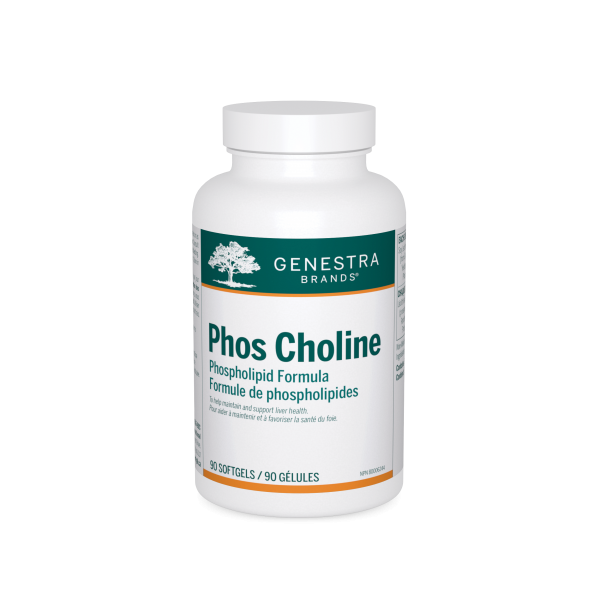
x• Formule de phospholipides dérivées de la lécithine
• Chaque dose quotidienne contient 2880 mg de phospholipides
• Soutien la santé du foie
Phos Choline transmet des phospholipides contribuant à soutenir le fonctionnement du foie. La phosphatidylcholine est le principal phospholipide (aussi connu sous le nom de phosphatide) trouvé dans la lécithine.
Il s'agit d'un composant important des membranes membranes cellulaires et il contient une concentration élevée d'hépatocytes. Toutes les lipoprotéines sont riches en phosphatidylcholine et sont principalement produites par le foie. Des taux normaux de phosphatidylcholine peuvent éviter l'accumulation de lipides hépatiques puisque la phosphatidylcholine est nécessaire à la production et à la sécrétion de lipoprotéines de très basse densité (VLDL), qui transportent les triglycérides à partir du foie. Des phosphatidylcholines peuvent entraîner une accumulation de VLDL et de triglycérides dans le foie, ce qui affecte négativement le fonctionnement et la santé du foie. De récents essais in vitro ont démontré que les hépatocytes peuvent également trop produire de radicaux libres quand ils se trouvent dans un milieu présentant des carences en choline; un excédent de production d'espèces réactives à l'oxygène peut endommager l'ADN et nuire au fonctionnement du foie. Lors d'un essai aléatoire à double insu, 57 adultes en santé ont adopté une alimentation pauvre en choline. Après six semaines d'appauvrissement, des stéatoses hépatiques, des dommages au foie et des dommages musculaires ont été observés chez 68 % des participants. Quand la choline a été rétablie dans l'alimentation, le dysfonctionnement des organes a été corrigé pour tous les participants en six semaines.
Lecithin-derived phospholipid formula
Each daily dose contains 2880 mg of phospholipids
Supports liver health
Phos Choline provides phospholipids that help support liver function. Phosphatidylcholine is the main phospholipid (also known as phosphatide) found in lecithin.
It is an important component of cell membranes and is found in a high concentration in hepatocytes. All lipoproteins are rich in phosphatidylcholine and are primarily produced by the liver. Normal phosphatidylcholine levels can prevent hepatic lipid accumulation since phosphatidylcholine is necessary for the production and secretion of very low-density lipoproteins (VLDL), which transport triglycerides from the liver. Phosphatidylcholines can lead to the accumulation of VLDL and triglycerides in the liver, negatively affecting liver function and health. Recent in vitro tests have shown that hepatocytes can also overproduce free radicals when in a choline-deficient environment; excess production of reactive oxygen species can damage DNA and impair liver function. In a randomized, double-blind trial, 57 healthy adults adopted a choline-deficient diet. After six weeks of depletion, fatty liver, liver damage, and muscle damage were observed in 68% of participants. When choline was reinstated in the diet, organ dysfunction was corrected in all participants within six weeks.
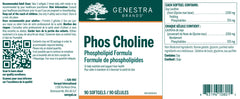
Adultes : Prendre 2 gélules 2 fois par jour aux repas ou selon l'avis de votre professionnel de la santé.
Adults: Take 2 capsules twice daily with meals or as directed by your healthcare professional.
Chaque gélule contient: Lécithine de soja (de Glycine maxbean) 1200 mg Produisant Phosphatides 720 mg
Ingrédients non médicinaux : Gélatine de bovin, glycérine, eau purifiée
Each capsule contains: Soy lecithin (from Glycine maxbean) 1200 mg, Phosphatide-producing 720 mg
Nonmedicinal ingredients: Bovine gelatin, glycerin, purified water
- Choosing a selection results in a full page refresh.